


Not Just “Lightweight”
Make the Shop Floor Easier
One-Month Free Trial Available
conditioning time reduced to 1/4
Operators reduced from two to one
Operators reduced from two to one
After the free trial, 98% of customers chose to adopt the DP-equipped PAD CONDITIONING TOOLS.
Less Operator Burden. Higher Productivity. Better Workpiece Quality.
A truly shop-floor-first PAD CONDITIONING TOOLS, proven by real installations.
Available for free trial in your preferred size.
What Our Customers Are Saying
Glass Industry

“You can clearly see how the pad is being dressed.”
“With our previous carrier, it was hard to tell if the pad was actually being dressed.
With this one, it’s obvious.”
“It’s lighter, so setup is much easier.”
“Very user-friendly.”
“Changeovers are faster; overall work efficiency has improved.”
“It’s light, precise, and much safer to use.”
“They gave us accurate advice during specification selection.”
“Having someone we can consult with is a big plus.”
Semiconductor Industry

“At first, we thought it wouldn’t work.
Now it feels like a revolution for us.”
A semiconductor manufacturer struggled with long ramp-up times after pad replacement.
After introducing the PAD CONDITIONING TOOLS, startup time was reduced and quality stabilized.
We didn’t think we could use it at first,but now we can’t work without it.”
“The conditioning accuracy is impressive — almost too good.”
“The precision is so high that if the lapping plate itself isn’t accurate,
the pad wears unevenly.”
Quartz Industry

“Being able to consult about dressing tools really helps.”
“We’d like to share a deeper understanding of dressing effects and optimal usage,and continue discussions on a regular basis.”
“First, the impact of light weight — then improved accuracy and higher cut rate.”
“With cast iron plates, there’s also value in stiffening the pad to improve accuracy.”
— a valuable new insight from the field.
“I’m impressed — you’re controlling every aspect of accuracy.”
“How does this PAD CONDITIONING TOOLS achieve such precision?”
Optical Industry
“I never thought it would become this indispensable.”
“These are pads we used to throw away.”
“The surface feel of the pad is clearly different.”
“I didn’t think a two-row layout would work.”
“Being able to compare with conventional products during the free trial was very helpful.”
“Our operators say they don’t want to use the old dresser anymore.”
“For us, weight reduction was the biggest advantage.”
“Is the pad really dressed?”
“Do we need to replace it already?”
“It’s too heavy — isn’t this actually damaging the pad?”
“Careful… it’s heavy.”
Do these thoughts come up every time you replace a pad?
On the shop floor:
・“Dressing takes two people — let’s skip it today.”
・Even after dressing, the finish isn’t great, and you end up thinking,
“Maybe it’s time to replace the pad.”
But what if—
You could extend pad life and eliminate finish inconsistency, easily?
“Lightweight” Changes Everything
・“Operators no longer avoid the task.”
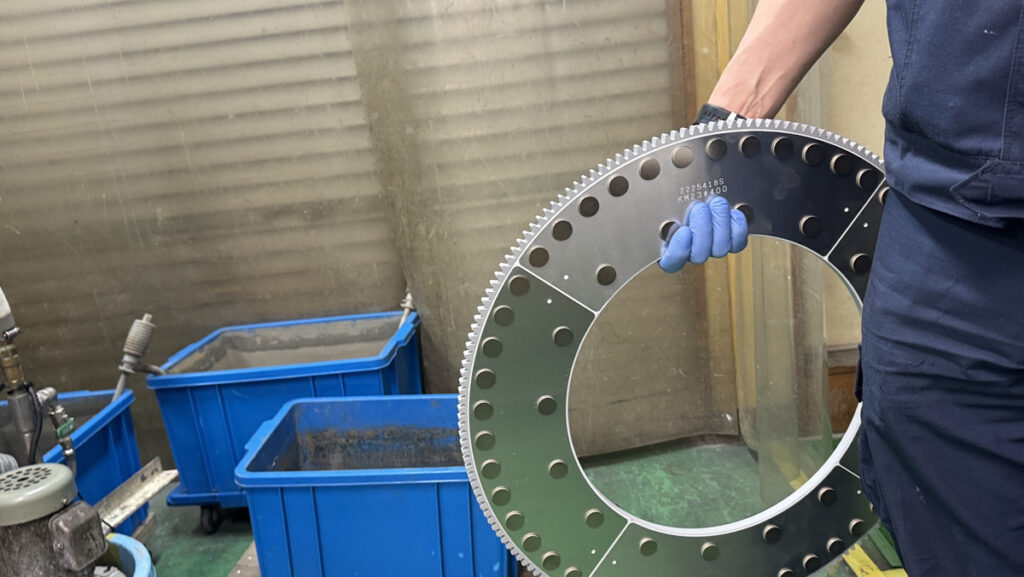
・“A job that required two people can now be done by one.”
The voices from the shop floor say it all.
98%Adoption Rate
Because the difference is obvious when you try it
A PAD CONDITIONING TOOLS That Delivers
·Lightweight
·High Precision
·High Removal Rate
conditioning Accuracy Changes Quality
・“We eliminated plate waviness and improved yield.”
・“The pad surface became truly flat.”
Quality issues once accepted as “unavoidable”
can often be dramatically improved simply by changing the carrier.
When You Notice the “Hidden Waste,” Costs Change Too
“We could have used it for 30 more pieces…”
Countless pads have been discarded simply due to insufficient conditioning.
In some cases, pad replacement frequency was cut in half after switching PAD CONDITIONING TOOLS.
Does This Sound Familiar in Your Operation?
・Operators avoid dressing tasks
・Pad accuracy or product quality varies
・You’re not sure if dressing is actually effective
・Pads still have thickness, but are replaced due to poor cut rate or accuracy
Start by Trying It on Your Shop Floor
If you’d like to “see it for yourself,” start here.
We’ll do our best to accommodate your size and specification requirements.
Installation Track Record (Selected Examples)
We continue to receive feedback from the shop floor that “exceeds expectations.”
・Widely used across multiple industries
Including optical, quartz, silica, oxide materials, and more
・Adopted by over 100 companies
・98%+ conversion rate from free trial to adoption
・Proven support for machines up to 36B
| Industry | Size | Challenge | After Introduction |
| Glass | 16B | Weight | Easier to set up |
| Glass | 20B | Conventional carrier was heavy, resulting in poor operability (approx. 17 kg/unit) | Lighter weight reduced operator burden and improved safety |
| Glass | 20B | No particular issues; no intention to change | After use, total benefits in light weight, accuracy, and removal rate were clearly felt |
| Glass / Polishing | 36B | Aging equipment, heavy | ・Able to consult on specifications ・Much lighter than expected, lowering the barrier to operating the polishing machine ・Lower cost compared to cast iron, providing cost benefits |
| General Polishing | 16B | Heavy, aging | Weight reduction was well received on the shop floor |
| General Polishing | 16B 15B | Aging, heavy, inconsistent workpiece accuracy | Contributed to accuracy improvement; light weight and good handling |
| Optical | Single-sided | Long dressing time | Dressing time reduced from 4 hours to 30 minutes |
| Optical | 20B | Purchase date unknown; several DP elements missing, assumed replacement needed | Existing PAD CONDITIONING TOOLS could be kept as a spare |
| Optical | 6B 7B | Pads were discarded when removal rate dropped despite remaining thickness | Dressing restored performance, allowing use until full pad life without disposal |
| Optical | 18B | Dressing effect unclear; recent workpiece accuracy poor, suspected pad shape | Workpiece accuracy improved; scratches were also reduced |
| Quartz | 9B | Doubts about overall thickness accuracy | Thickness was uniform immediately after use, with most DP elements in contact |
| Quartz | 9B 6B | Unstable workpiece quality | Improved pad surface condition led to better workpiece quality |
| Precision Equipment | 22B | Heavy and physically demanding for operators | Weight reduction improved shop-floor satisfaction |
| Precision Equipment | 9B | Poor workpiece accuracy | Quality improved; conditioning time was also shortened |
| Precision Equipment | 13B 9B 6B | Poor accuracy and low removal rate | Both workpiece accuracy and removal rate improved |
| Quartz | 24B | Daily dressing required; heavy and difficult to handle | Lighter weight and better handling made shop-floor work easier |
| Quartz | 20B 18B 16B 15B | Burden during setup and long conditioning time | Reduced workload during changeovers |
| Quartz | 16B | Declining conditioning capability; long polishing time | Stable conditioning performance with no fluctuation in conditioning time |
| Quartz | 20B | Heavy dresser carrier difficult to set on lapping plate | Lighter weight made setup easier and improved operability |
| Semiconductor | 28B 22B | Need to shorten dressing and setup time; improve safety | Machine operation time: 30 min → 10 min Setup: 2 operators / 30 min → 1 operator / 10 min |
| Semiconductor | 12B | Unstable supply of dresser products; long pad ramp-up time | Ramp-up time significantly reduced; surface quality also improved |
| Semiconductor | 12B | Poor pad accuracy leading to poor workpiece quality | Improvement trend confirmed |
※In addition to the above, many more installations have been completed.For details,
please contact us.
Is It Really the Pad’s Fault?
There are phrases we hear all the time on the shop floor.
・“The workpiece finish isn't good.”
・“The edges are sagging.”
・“I'm not sure what's wrong — let’s just replace the pad.”
・“Dressing is heavy. I don't want to do it.”
・“I can't tell if the pad is actually dressed.”
・“I can't do this alone — we’ll wait until someone else is here.”
But is that judgment really correct?
What If the PAD CONDITIONING TOOLS Were
Lightweight — and Truly Precise?
Operators begin to say,
“I’ll take care of it now.”
By flattening the pad surface properly,
uneven wear is reduced and pad life is extended.
As a result, workpiece quality stabilizes — and costs go down.。
“Our old carrier was something we avoided using.This one is something we want to use.”
— Factory Manager
Everyday decisions made on a vague feeling of “something doesn’t seem right”
“Lightweight is powerful.”
But that’s not all.
Experience a PAD CONDITIONING TOOLS that truly moves the shop floor —
Why We Offer a Free Trial
We believe the fastest way to understand a product
is to use it on the actual shop floor.
・No matter how light it is.
・No matter how precise it is.
・No matter how good the numbers look on paper.
If the same results cannot be reproduced in your operation —
if it does not deliver real benefits in your process —
then it has no meaning.
At one factory, we were told frankly:
“To be honest, we thought it wouldn’t work.”
But after trying it on-site, the evaluation changed completely:
“Now, we can’t imagine working without it.”
Let us be clear.
We are confident in this product.But we don’t want to stop there.
To make it even better,we need real feedback from the field.
Polishing is an invisible world.There is no single correct answer.
The right solution differs depending on the shop, the product, and the objective.
That is exactly why we want to understand it —
as a polishing technology, not just as a product.
We are not offering a free trial simply to sell.
We want both managers and operators to make decisions they truly agree with.
What is actually happening on the pad surface?
What conditions lead to stable, repeatable results?
These are questions best answered on the shop floor, not on drawings.
We want to build products that work in real operations, together with you.
・“Light and safe.”
・“Fast, yet precise.”
We want you to verify that —in your own process.
And after that, we’d genuinely appreciate your honest feedback:
・“This approach could work even better.”
・“This part should be improved.”
・“In our process, we’d like it this way.”
Those voices are what help us move forward.
What Is a PAD CONDITIONING TOOLS
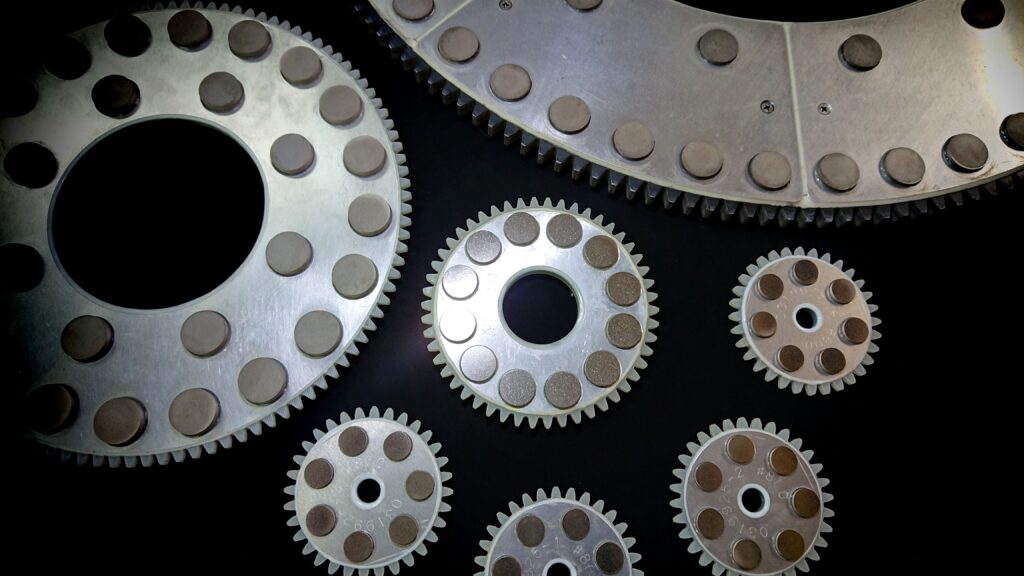
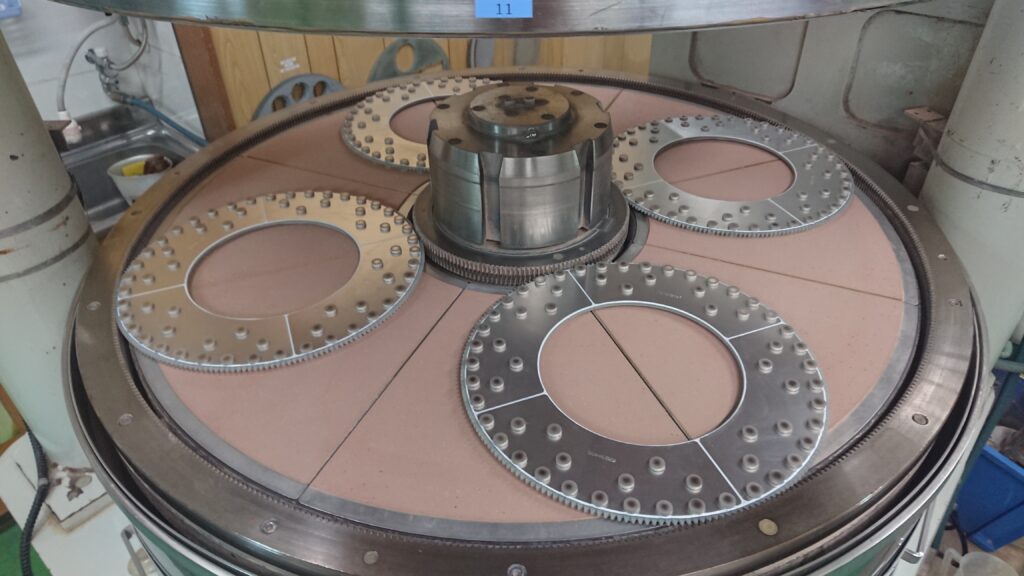
A PAD CONDITIONING TOOLS is a dedicated tool used to restore and maintain the surface accuracy of precision polishing pads.
It removes the top layer of a newly installed pad to ensure a uniform and stable working surface.
Workpiece accuracy depends directly on pad geometry.
That is why insufficient dressing often leads to defects —
a situation far more common than many expect.
Using a PAD CONDITIONING TOOLS is simple.
You place it on the lapping plate and let it rotate.
That’s all.
Yet the effect is significant.
It evenly levels the pad surface,
and many operators are surprised to see
just how much the plate and pad condition improves so quickly.
“Can the plate really be corrected this easily?”
This reaction from the shop floor is not unusual.
Why YMI PAD CONDITIONING TOOLSs Are Chosen
Lightweight
Unlike cast iron carriers that require two operators,
YMI PAD CONDITIONING TOOLSs are exceptionally lightweight.
・Physical strain during operation is drastically
・reduced Risk of injury during setup and handling is minimized
| Machine Size | Cast Iron (1 pc) | YMI Correction Carrier (1 pc) |
|---|---|---|
| 9B | 3kg | 0.6kg |
| 16B | 9kg | 1.9kg |
| 22B | 18kg | 3.6kg |
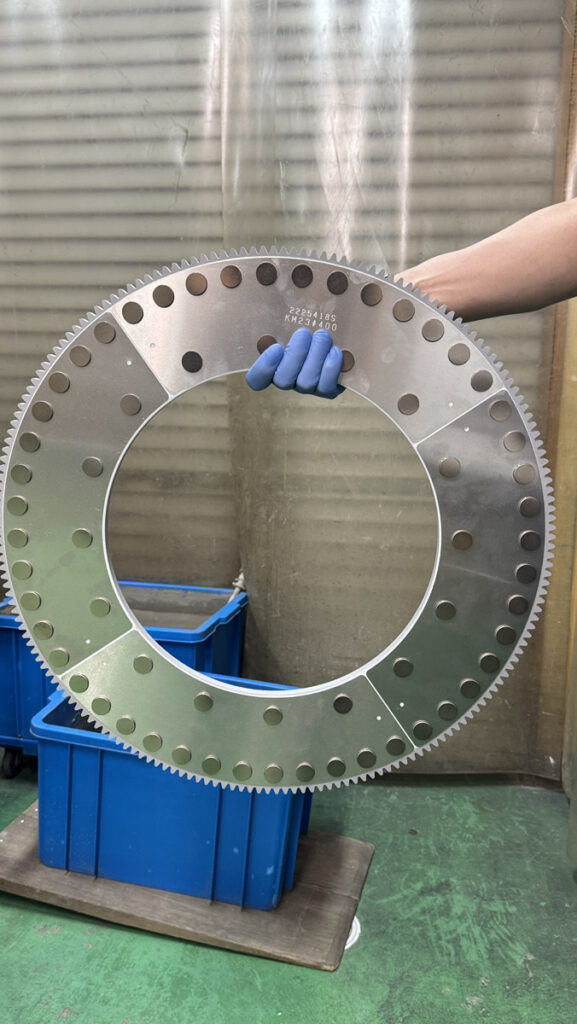
Lightweight
Up to 83% weight reduction
Dramatically lowers operator workload.
Speed
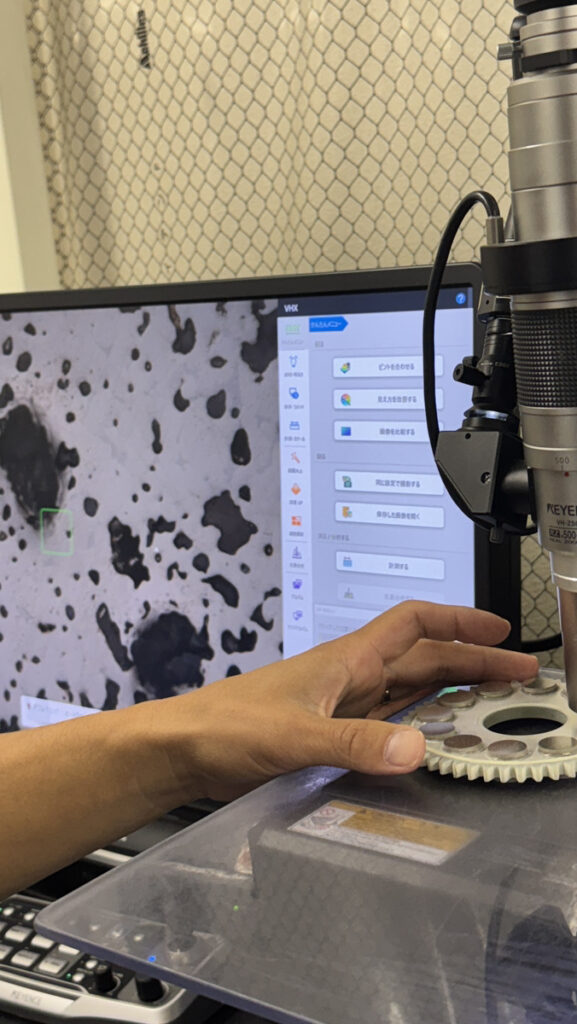
A dressing process that once took 4 hours can be completed in just 30 minutes.
Less downtime means more productive machine time
—and higher overall yield.
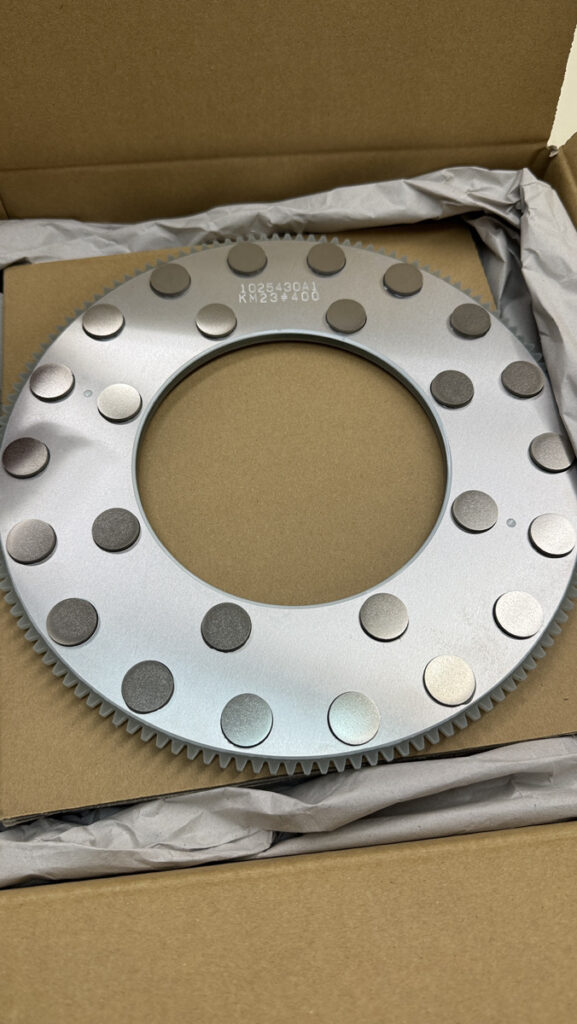
This performance is made possible by YMI’s proprietary DP (diamond pellet) development,
backed by our expertise as a fixed-abrasive manufacturer.
Each carrier is shipped after precise dressing at our facility,
with DP protrusion adjusted to the optimal height for immediate use.
Speed
Precision
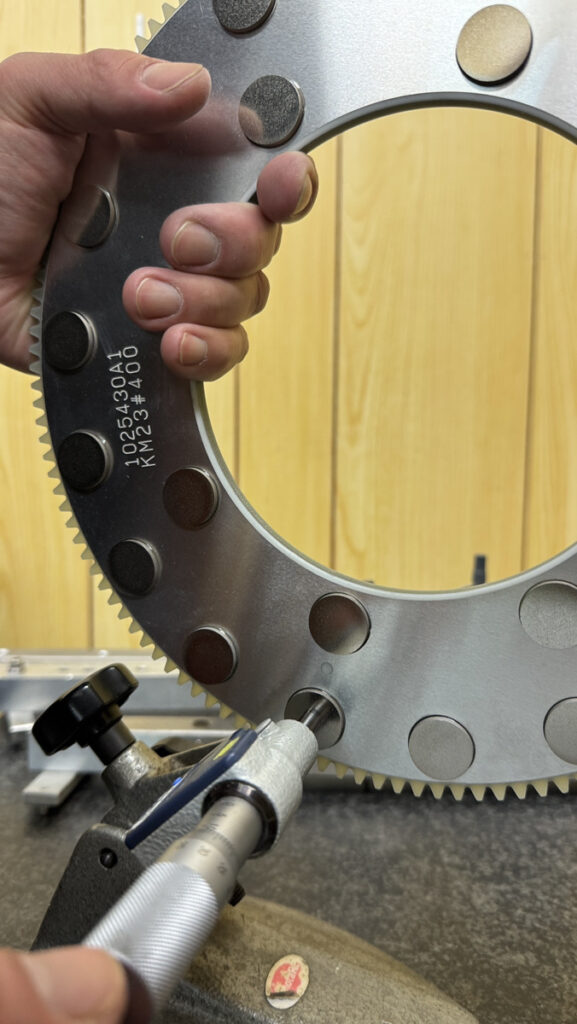
All components involved are manufactured with strictly controlled and uniform thickness.
As a result:
・Pad waviness is effectively eliminated
・Edge roll-off is properly corrected
Many users report:
・“This is different from conventional dressing.”
・“The way the pad wears has completely changed.”
Precision
Flexibility & Support
“There was nowhere we could consult about dressing before.
“Now we want to discuss our process on a regular basis.”
We don’t just supply products —
we support your dressing process as a technical partner.

対応力
The Development Story — In the Words of Our Technical Director
“The moment I was happiest as a developer was when someone simply said, ‘That’s impressive.’”
As Technical Director, I’ve been involved in every step of the PAD CONDITIONING TOOLS’s development —
from initial design and prototyping to on-site implementation.
From the beginning, we kept hearing the same comments, both inside and outside the company:
“Honestly, dressing is a pain. Does it really make a difference?”
And over time, that mindset had become normal on the shop floor.That never sat right with me.
So I decided:
f that’s the case, then we should build a PAD CONDITIONING TOOLS that people actually want to use
— one that truly matters.
From there, we focused relentlessly on balancing light weight, precision, and conditioning efficiency.
Even internally, there was skepticism:
“Dressers don’t sell. They’re only bought when a machine is installed.”
“It’s a one-off product — no repeat business.”
When we first provided a sample to a customer,they said:
“It’s light — and the precision is incredible.”
Just one sentence.
But for a developer, that was the highest praise imaginable.
As a product, the PAD CONDITIONING TOOLS has already proven itself in the field.
Still, I believe there’s more we can learn.
I want to hear more real voices from real operations.
How did it feel to use?
What would make it even easier to work with?
If you’re willing,
I’d love for you to try it once — in your own shop floor environment.
Technical Director
FUJIMORI
Frequently Asked Questions
Q. What size range do you support?
A. We have experience with both single-sided and double-sided machines, covering sizes from 6B to 36B.
Each size is designed specifically for its application.
If you require a size outside this range, please feel free to contact us.
Q. Can we choose the grit size and DP layout?
A. Yes. Based on your dressing target and process objectives,
we will propose the optimal grit size and DP layout pattern.
Q. How much lighter is it compared to a conventional cast iron carrier?
A. Our PAD CONDITIONING TOOLSs weigh approximately one quarter of conventional cast iron carriers.
Actual weight varies depending on size.
Q. Is thickness variation worse than cast iron carriers?
A. No — it is actually lower.
Currently, batch thickness variation is controlled to approximately 30 μm.
Q. Is rigidity sufficient?
A. Yes. Each carrier is manufactured with an appropriate thickness to ensure the required strength and rigidity for its intended application.
Q. Can you support large carriers (32B and above)?
A. Yes. For large sizes, we first send a dimension-check carrier to verify compatibility and operation on your machine before final production.
Q. How does the free sample process work?
A. We confirm your required size and specifications first.
If stock is available, the sample will be shipped immediately.
Q. Do we need to return the sample after use?
A. Yes. Samples are provided on a return basis.
We kindly ask customers to cover the return shipping cost only.
Q. Is maintenance required for the PAD CONDITIONING TOOLS?
A. After use, simply rinse lightly with water and store.
No special maintenance is required.
Q. Are there any pad types that cannot be used?
A. Compatibility depends on the purpose and process conditions.
Please contact us for specific recommendations.
Q. Is it okay if we decide not to purchase after the trial?
A. Absolutely. There is no obligation to purchase.
You are welcome to “try it out only”.
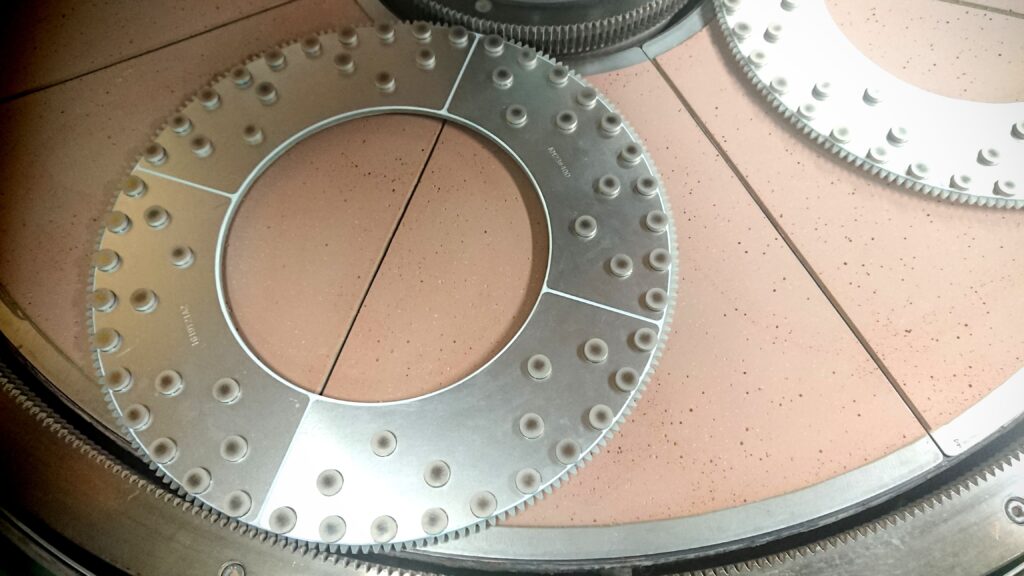
Start by Experiencing It on Your Shop Floor
Operators change.
Accuracy changes.
Yield changes.
The difference a PAD CONDITIONING TOOLS makes cannot be understood on drawings alone —
it can only be truly felt on the shop floor.
We invite you to try it thoroughly
in your actual production environment for one full month.
Many customers are surprised and say:
“We didn’t expect this much from a free trial.”
Even if you just want to discuss your process, that’s perfectly fine.
Please feel free to contact us anytime.
Please note: depending on the size, some models may require additional lead time for production if not in stock.